
Why Doors Stick in the Summer and What Homeowners Can Do About It
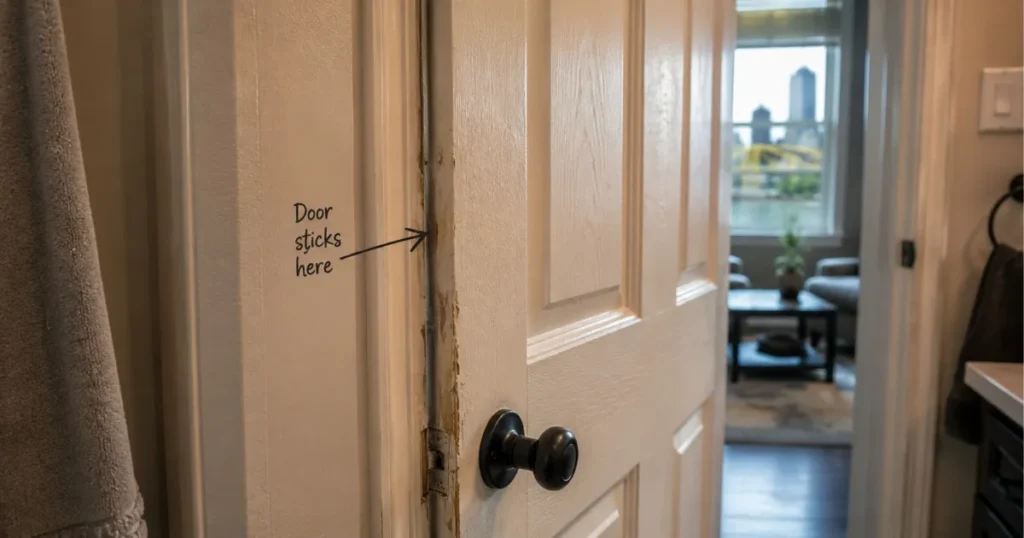
Every summer, the same thing happens in a lot of Pittsburgh homes. A door that closed fine in March suddenly drags on the frame, sticks at the top corner, or needs a shoulder to shut. Nothing broke. Nothing was moved. It just stopped working the way it used to.
Most of the time, the cause is humidity. Wood absorbs moisture from the air, swells slightly, and a door that had just enough clearance no longer does. It usually settles back down when the air dries out in the fall.
That said, not every sticking door is a seasonal issue. Some are telling you about a loose hinge, a shifting frame, or a moisture problem worth looking at. Here is how to tell the difference and what you can reasonably handle yourself.
Why Summer Humidity Makes Doors Stick
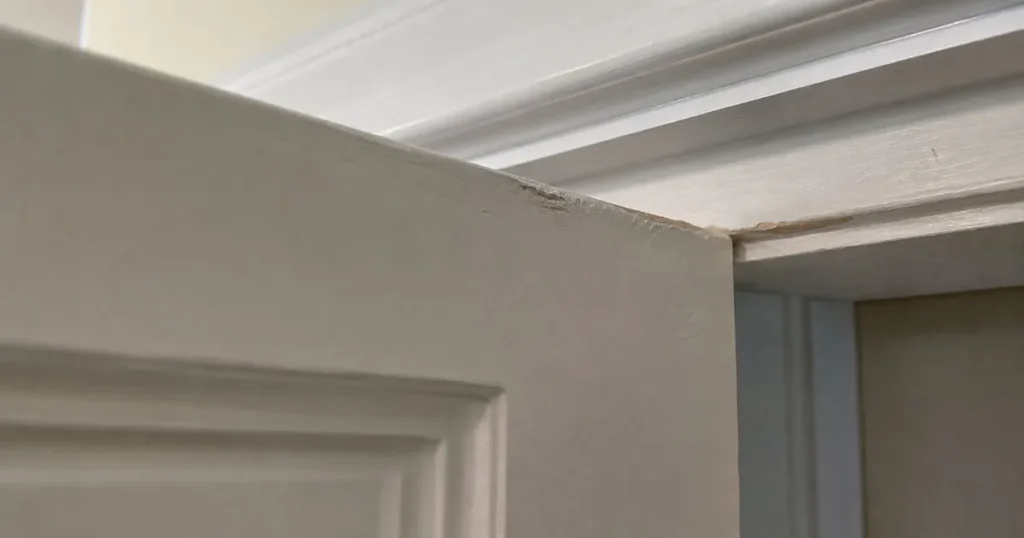
Wood is porous. When the air holds more moisture, wood takes some of it in and expands. When the air dries out, it releases that moisture and shrinks back. This happens every year, in both directions.
The gap around a typical interior door is small, often around an eighth of an inch. It does not take much swelling to close that gap. Once the door edge makes contact with the jamb, you feel it as sticking, dragging, or a door that will not latch cleanly.
Pittsburgh summers make this more noticeable than a lot of places. Humid stretches in July and August, older housing stock with solid wood doors, and homes without central air all add up. Rooms that run warmer and damper than the rest of the house tend to show it first, which is why bathroom and basement doors are usually the first complaints.
Hollow-core and steel doors move less than solid wood, but their frames can still swell. If the frame moves, the door still binds.
How to Tell if It Is Humidity or Something Else
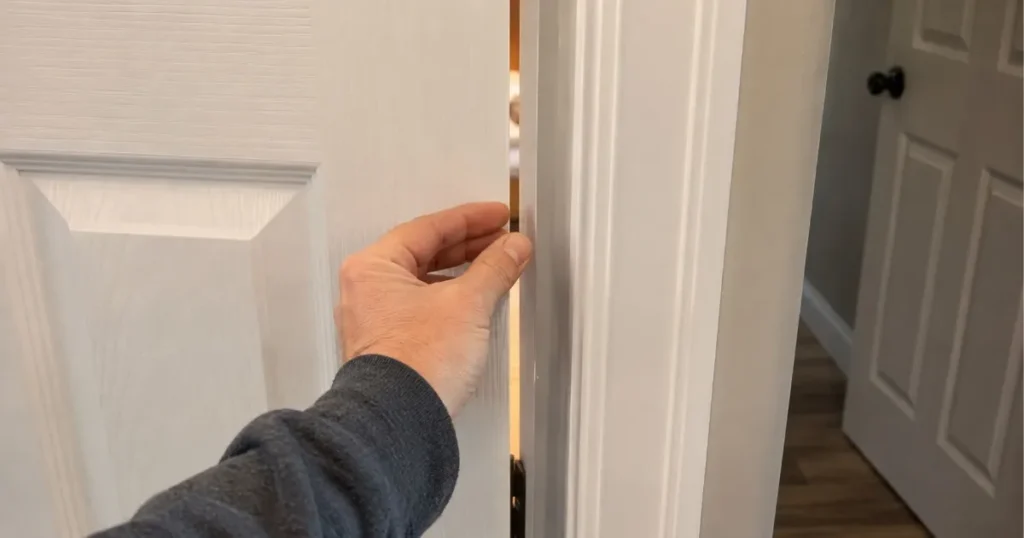
Before you touch a plane or a sander, figure out what is actually going on. A few minutes of checking will save you from cutting material off a door that did not need it.
Signs it is seasonal humidity:
- The door worked fine in winter and spring
- It sticks along the top edge or the upper latch side
- Several doors in the house are doing it at once
- The gap looks even everywhere except where it rubs
Signs it is something structural or mechanical:
- The same door sticks year round
- The gap is noticeably wider at the top and narrower at the bottom, or the reverse
- The door swings open or closed on its own
- You see cracks in the drywall above the door corners
- The latch no longer lines up with the strike plate at all
- The floor near the door feels soft or uneven
Here is a quick check that tells you a lot. Close the door slowly and watch where it makes contact. Then slide a piece of paper around the perimeter. Wherever the paper will not pass, that is your contact point. Contact only at the top or upper corner usually points to swelling. Contact along a long diagonal usually points to the door or frame being out of square.
If you find drywall cracking, a frame that is visibly out of square, or a door that has gotten worse every year regardless of season, that is worth having someone look at rather than sanding down.
Simple Fixes Homeowners Can Handle
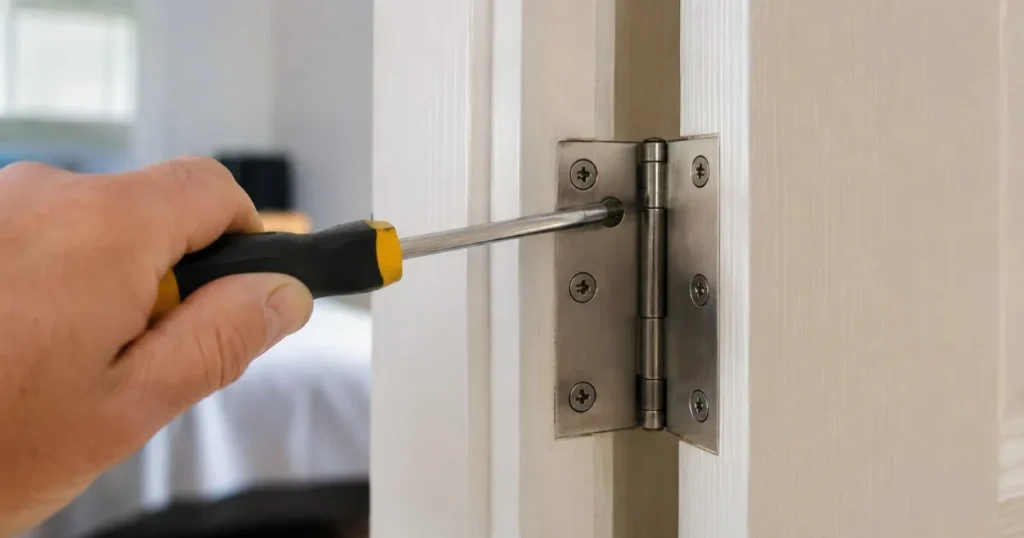
Start with the least invasive fix and work up. The order matters, because removing material is permanent and swelling is not.
1. Tighten the hinge screws.
This solves more sticking doors than anything else. Over time, hinge screws work loose and the door sags slightly toward the latch side. Tighten every screw on both the door and the jamb leaf. If a screw spins without catching, back it out and replace it with a longer screw, around 2.5 to 3 inches, so it reaches the framing behind the jamb rather than just the trim.
2. Clean and lubricate the hinges.
Dry, dirty hinges add drag and can make a door feel like it is binding when it is not. A little silicone spray or a dry lubricant on the pins helps.
3. Reduce moisture in the room.
If it is a bathroom door, run the exhaust fan during and after showers. A dehumidifier in a damp basement helps those doors too. This is a slow fix, but it addresses the actual cause.
4. Rub the contact point with a bar of soap or paraffin.
This is an old trick and it works for light rubbing. It reduces friction enough to get through the season without changing the door.
5. Adjust the strike plate.
If the door closes but will not latch, the problem is often alignment, not size. Loosening the strike plate and shifting it a small amount, or filing the opening slightly, can bring it back into line.
A note on sanding and planing. It is tempting to take material off the sticking edge, and sometimes that is the right call. But if the swelling is seasonal, you will end up with a door that rattles and has a visible gap all winter. If you do decide to remove material, wait until you are sure the door sticks in dry weather too, take off as little as possible, and seal any bare wood you expose so it does not absorb even more moisture next summer.
When It Makes Sense to Call a Handyman
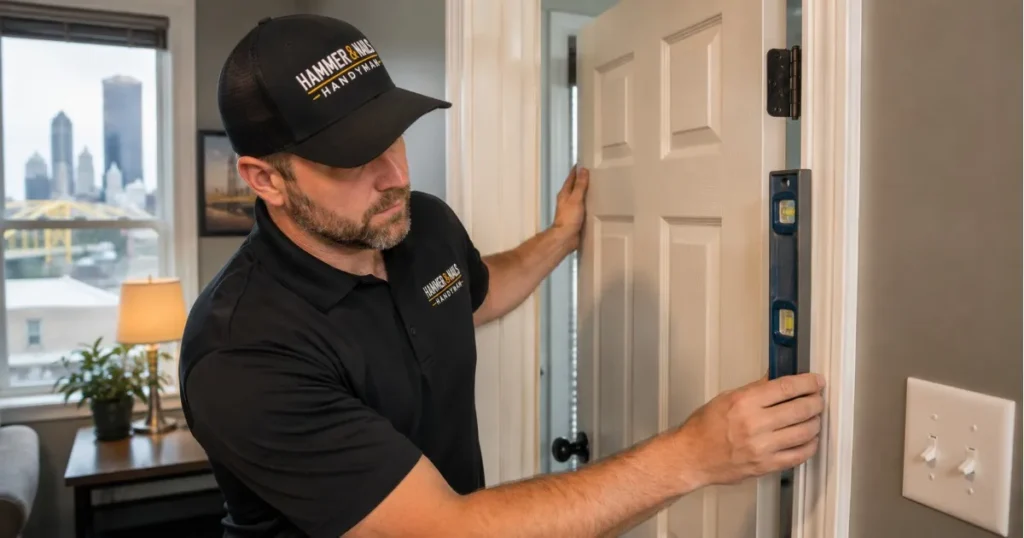
Plenty of sticking doors are a ten-minute fix with a screwdriver. Others are not, and it usually comes down to whether the door is the problem or the frame is.
It is worth having someone take a look when:
- The door sticks in every season, not just humid stretches
- Hinge screws will not hold, or the hinge mortise is damaged
- The frame is out of square and the door needs to be rehung
- The latch and strike plate are far enough off that alignment will not fix it
- There are cracks in the drywall at the door corners
- You have a heavy exterior or solid-core door that is difficult to remove and rehang safely
- The door has water damage, soft spots, or swelling near the bottom
That last one matters. A door swelling at the bottom edge often points to moisture coming from somewhere other than the air, whether that is a leak, poor drainage near an exterior door, or a plumbing issue in the room. Fixing the door without finding the source means doing it again.
Door adjustment, rehanging, hardware replacement, and frame repair all fall under general home repairs and carpentry, which is everyday work for our team. Availability varies based on project type and location. After reviewing your project details, the team will follow up with next steps.
Keeping Doors Working Through the Season
Sticking doors in July are normal in this part of the country. Most of the time you are looking at loose hinges, humid air, or both, and both are manageable without taking a plane to anything.
Work through it in order. Check where the door is actually making contact. Tighten the hinges. Control the moisture in the room. Give it a season before you remove material. If the door is still fighting you in January, or if the frame itself has moved, that is a different repair and it is worth getting eyes on it.
If a door in your home has gotten worse instead of better, or you would rather have it handled correctly the first time, we can help. Hammer and Nails Handyman handles door adjustments, carpentry, and general home repairs throughout the Pittsburgh area.
Call the Pittsburgh team at 412-204-6888 or reach us toll-free at (844) 474-2639. Tell us about your project and we will go from there.